Friday, September 2, 2011

Lightning Fruit & Hurricane Bird


We got off easy with Hurricane Irene.  My area basically just had a long, heavy rainstorm, with some unusually strong winds. In my neighborhood a few big tree limbs came down but very few entire trees.  We didn’t even lose power. Victor and I played board games anyway that evening, even if we didn’t do it by candlelight as I’d expected.  Basically we were prepared for the worst but were lucky.

So Monday morning I visited Lake Frank as I’d planned, to survey any damage there.  Lake Frank too was lucky. A lot of light debris had fallen onto the trail. The water level was a few inches higher than last week, but nothing outrageous.  I found only one part of the trail that was actually blocked by a downed tree. The tree had fallen with its full, leafy branches right across the pathway.

This is how it looked from the far side.


When I came up to the tree I was following an older gentleman whom I’d encountered along the trail. He was walking his daughter’s dog, and had been telling me about his knee troubles and the knee replacement he was considering.  When we came to the tree blockage he just charged right into the treetop, clambering precariously along the main limbs. I was worried for his safety, so even though I could have just walked around the tree, I followed right in. Many of the branches were still damp and slippery from the storm and the overnight dew. A few limbs even had loose bark, making footing particularly treacherous. We both slipped a couple times, and later I discovered a line of big black bruises down the inside of my thigh even though I didn’t remember a fall hard enough to cause them.  They’ve faded to greenish by now as you see below, but are still sore.

Score one for the tree.

It was hard to see outside of the tree as we clambered through. I felt like leaves were barely inches from my face, although in reality it was much more spacious. The illusion meant at one point we veered away from the actual trail, following the fallen tree trunk instead. But eventually we made it safely out of the treetop and back to clear trail.

Other than the fallen tree, the most notable change at Lake Frank was the vast quantity of fungi that popped up in the rain’s wake.  I heard an old myth about mushrooms was that they would sprout where lightning struck the ground. I can see how that would make some sense, they do seem to appear so quickly after rain and thunderstorms. I know it’s not true of course but I do still like to think of mushrooms as lightning fruit. Let me know if you recognize any of these-- I don't know my fungi.

This slug loves a tasty mushroom lunch!

Very pretty; maybe an amanita?

Funky young mushroom.

These grew under pine trees.

I'm guessing another amanita.


Eventually I had to head back to the car, and I hadn't made it far enough around the lake to do the whole loop. So I turned and walked back the way I came, expecting I’d have to negotiate that fallen tree again. Much to my surprise when I got there, somebody had come along with a chainsaw and cleared the path! I don’t know whether this was a park employee, an official trail volunteer, or simply a kind neighbor who took the responsibility on his or her own shoulders. Whoever it was, though, I am impressed and grateful.

Hey look, the trail's back!

Unfortunately, I didn’t find any truly fabulous hurricane birds at the park. A Great Egret was new, but one had been reported last week at nearby Lake Needwood so it may have merely switched neighborhoods. The only likely hurricane drop-in I found was a Ruby-crowned Kinglet. What I saw was a tiny, active olive-drab bird with light eye-ring and strong black & white wing bars. I’m familiar with kinglets from many winters seeing them here. I don’t think they normally show up in Maryland for another few weeks, but this sure looked and behaved like the kinglets I’m used to. The bird was making a high-pitched, rapid, almost agitated “ti ti ti ti” kind of call as it crept along branches. I found it in a brushy thicket not too far past the fallen tree, along with several chickadees and catbirds. It was much too quick and jumpy for me to get a photo, unfortunately. It’s possible I saw instead some other bird that’s normally around now, but I’m pretty confident with my ID. Not as cool as the rare ocean-going terns that some birders found after the hurricane, but still neat.

Ruby-crowned Kinglet.  Photo credit: Donna Dewhurst/USFWS


Today's location: Lake Frank, Rock Creek Regional Park, Derwood, MD

Saturday, August 27, 2011

Rainbow Before the Storm


Along with pretty much the rest of the east coast of the US, we're preparing for hurricane Irene today. The first bands of rain are already sweeping across my area; we had a glimpse of sun early this morning but soon huge ugly clouds rolled in, threatening everybody who was out running last-minute errands (like me).

We're expecting loss of power tonight and maybe for a few days, which means no internet connection either.  So right now I'm cooking a big pot of stew to hold us over; tonight we'll have a fun board game night by candle or flashlight. I'm also not planning on heading outside much until about Monday, although at that point I hope to go check Lake Frank for possible hurricane birds-- seabirds blown in by the winds perhaps, or migrants forced to land for safety.  Don't worry, I won't be heading out til it's safe.

But until then, I just wanted to post some of the brilliant colors I found at Lake Frank this week.  Enjoy, and stay safe if you're in the hurricane's path!

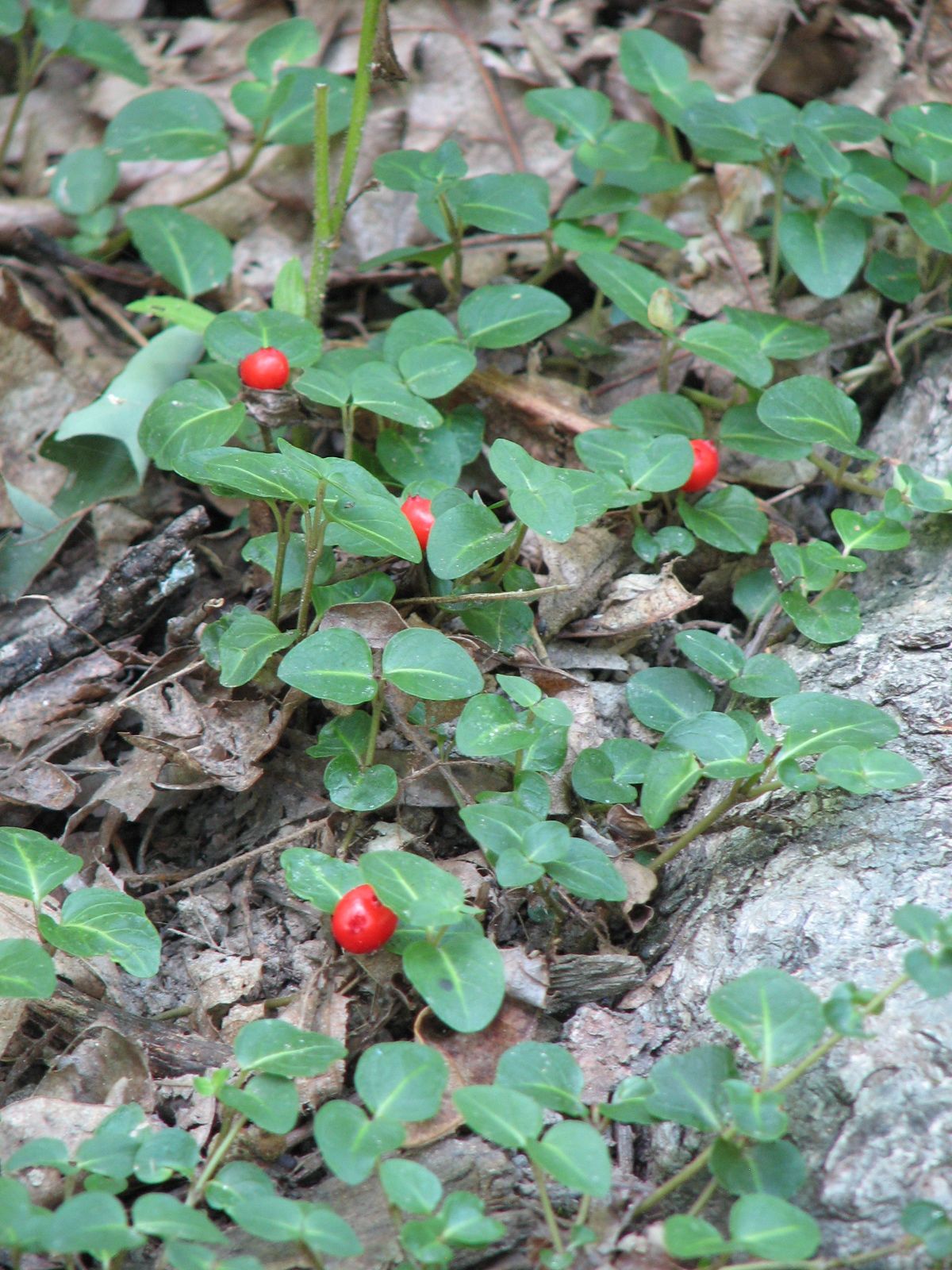
Red
Partridge Berries.

Orange (well, barely, but a pretty cool encounter anyway!)
Copperhead snake in the middle of the trail. I obliviously walked right over it, joggers behind me noticed it when it feinted at them and mock-rattled its tail. We nudged it gently off the trail after I got this photo. I'm so excited to have finally seen one!

Yellow
Beetles and bees were loving this bright goldenrod.

Green
Poison ivy berries-- they'll be white when ripe. A good food source for lots of animals (who aren't allergic like we are). Did you know poison ivy is in the same family as cashews? Hmm, tasty.

Blue
Heal-all (Prunella vulgaris), introduced and probably invasive-- it's in the mint family. Cute little flowers though.

Purple
Burdock, also introduced. Edible though-- I've actually eaten burdock at a local vegetarian restaurant. Pretty tasty.
Hope all the wildlife finds safe shelter through the storm.

Sunday, August 21, 2011

I Don't Want To Be a Cicada


Mist-cloaked Lake Frank after a night of rainstorms.

Originally I was going to stay home on Friday.  My husband wanted to borrow my car and I figured I’d hang out with the cats, get some cleaning done, that sort of thing.  But at the last minute he decided to take his own car after all, and the expected rain looked like it would hold off til early afternoon.  So I took this as a sign that I should go hiking.

We’d had some fierce torrential thunderstorms Thursday afternoon and night, so I wanted to see how Lake Frank looked. I also thought I might get neat photographs of raindrops clinging to leaves. There was indeed still a lot of moisture everywhere, but most of it was suspended in the air. The weather started somewhere between misty and hazy, as you can see above, but ended up just plain hot and sticky by mid-day. I did get a few interesting shots though, including some of droplets on perched damselflies.  Zoom in on the damselfly shots to really see the mist.

I love when mist catches sunbeams like this.

This damselfly carried only one mist droplet.

This one has a whole family of droplets to carry!

I spent most of my day in two spots at the park.  One was a shallow inlet that held Mallards, Wood Ducks, a Green Heron, a newly arrived Spotted Sandpiper and basking Painted & Red-bellied Turtles. I had to wade through thigh-high wet grass to get there, but it was worth getting a bit damp. I perched on a hunk of lumber near the shore, probably a fisherman’s seat, and got to observe the undisturbed animals from fairly close.  Even though the air was too hazy to make for fantastic photos, I still had a great time watching the animals, especially the Green Heron while it hunted minnows.  I love Green Herons, they are so energetic and interesting.

The fluffy white debris is molted mallard feathers. Messy little beasts.

Check out that gargantuan Red-bellied Turtle, must be at least the size of a Mallard! The sandpiper is on the short log in the foreground.

I also spent a lot of time in some semi-reclaimed parking lots.  These expansive swaths of asphalt have been abandoned for years, it looks like, and are in the process of returning to weedy wilderness. Although I did meet a few hikers just back from four years out of state, who were shocked and saddened at the lots’ abandonment, I love it. It’s amazing to see wildlife fighting to take the area back, sprouting clumps of milkweed here, rambling blackberry vines there. I’ve found lots of cool plants and animals in these parking lots this summer, and today didn’t disappoint. I found several humongous Cicada Killer wasps (Sphecius speciosus) in the parking lots, one individual even carrying prey!

Cicada Killer on the hunt.


Apparently the female Cicada Killers dig long burrows ending in cells which they stuff with paralyzed cicadas.  One egg is laid per cell, and in a few days the eggs hatch into small but ravenous larvae who feast on the cicadas for a couple weeks before pupating through the winter. I watched the wasps patrol a tangle of tall grasses on a former road median.  It was hard to get a good look at them, let alone many photographs, as they skimmed swiftly through the grassy tops and swooped down into the denser parts of the tangle.  I wasn’t exactly sure of the ID, especially since I didn’t have a bug field guide with me, until I finally saw the individual with prey. She landed heavily on the grasses and then clambered deep into the tangle, presumably heading for her burrow. Way cool.

Cicada Killer with prey.


Also in the former parking lots I spotted a lurking Praying Mantis, a Gladiator Katydid (what a great name!), a passel of milkweed bug nymphs, a robber fly, and blooming goldenrod, mullein and thistle, plus plenty of birds and butterflies. Not bad for a patch of asphalt.

This mantis was browner than the ones I saw at Meadowside, so not as well camouflaged.

Gladiator Katydid on milkweed.

A robber fly, I think Promachus rufipes. Fierce looking but it won't sting you.

Tiny Milkweed Bug nymphs haven't yet developed their black wings.

Bees were loving the goldenrod, including this one with bulging pollen baskets!

I have to say, this makes the second hike in a row where I witnessed a rather horrible death of a cicada.  Is there a pattern here?  I know one thing for sure-- I don’t want to reincarnate as a fat, juicy cicada!

This entry's park: Lake Frank, Rock Creek Regional Park, Derwood, MD 

Wednesday, August 17, 2011

Yikes


Praying Mantis lurks in some Boneset.

Predators were everywhere when I visited the pond at Meadowside Nature Center last week.  Some of them I spotted right away, some I only found when I looked at my photos later. I photographed this Monarda to catch a small bee in action, but later realized I had captured a Praying Mantis lurking in ambush! Good thing I’m not small enough to be prey, I would have blundered right into the mantis’ trap.

The mantis is just to the left of the top two blossoms.


I also found these tattered remains of a Monarch butterfly in the pond—perhaps a dragonfly’s victim.  It’s too bad, too-- I haven't seen many Monarchs this summer. Hopefully I’ll spot more over the next several weeks, especially as their migration starts.

Death among the lily pads.


Later I discovered another mantis lurking on the side of a wooden fence post.  Here it’s munching on half of a bug; in the next shot you can also see the other half of the carcass on a nearby plant stem.

Munch munch.

Cleaning up after dinner.


A few hours later I witnessed a tremendous battle in miniature. First I heard an odd-sounding cicada, rattling slowly and somewhat erratically.  I was able to trace the sound to a clump of shrubby plants with willow-like leaves.

A cicada I'd seen earlier in the day.


It took me a few minutes to search the greenery.  Then I noticed a small patch of leaves shaking.  I finally found the dark shape of the cicada—and realized why it was struggling to make noise: a praying mantis had it clutched in a death grip! The cicada was pretty huge compared to the mantis, several times the size of the mantis’s head.  That was one strong and ambitious mantis. It hung on to the cicada even when pulled upside down. The cicada wasn’t giving in easily, either. The battle seemed to go in waves: first the cicada would make some progress, the mantis getting yanked back and forth as the cicada almost got free.  Then the mantis would wrestle it back under control and the cicada would quiet down, but not for long.  Finally the mantis won, chomping into the cicada’s abdomen while the latter’s legs were still wriggling! Yikes.

Fight stage A-- mantis is currently winning.

Fight stage B-- cicada's struggles have pulled mantis upside down.

I saw lots of other hunting going on at the pond that morning too. A Red-tailed Hawk circled overhead, a spider wasp prowled among the lily pads and a fishing spider stalked across the pond surface.

Red-tailed Hawk looking for lunch.

Spider wasp, family Pompilidae.

Six-spotted Fishing Spider creeps across the hydrilla.

Wow. I was sure glad there were no predators large enough to hunt me.

This entry's location: Meadowside Nature Center, Rock Creek Regional Park, Rockville, MD.

Friday, August 12, 2011

Goldfinches Are Smart


The Mensa society for birds.

I’ve noticed something odd in my yard. I currently have two sunflower seed feeders up, plus a couple dozen ripening sunflower plants that sprouted from dropped seeds. About thirty different bird species come to my feeders, probably a few hundred individuals over the year. But out of all those birds, only the goldfinches have figured out they can get the same food on the sunflowers themselves.

My garden setup: birdfeeders, sunflowers and veggies.


It’s not like I hide the sunflowers. They’re right next to the feeders since they sprouted from seed the birds dropped anyway. It’s not even that the other birds don’t like the plants at all—they’re perfectly happy to sit on them while waiting for space on the feeders. But only the goldfinches sit on the flower heads pulling out seeds. I thought for a while it was a comfort issue—the dangling flowerheads mean the goldfinches have to hang almost upside down or find a nearby leaf to stretch from. But the birds who normally are ok with odd perches, like chickadees and titmice, haven’t bothered either. 


Clever goldfinch!

Earlier this summer I wanted a more diverse food offering so I filled one feeder with nyjer seed (thistle seed), but that wasn’t very popular.  Then I tried a “finch mix” that included nyjer, sunflower chips, and millet.  That didn’t go over well either. Both times only a few goldfinches were interested, plus a sporadic house finch on the seed mix when the sunflower seed feeder ran empty. Mostly the finch feeder emptied when the goldfinches figured out how to pry open the hinged seed windows, so the seed just seeped out onto the ground to rot. This stuff is too expensive to waste like that, so I flipped the seed windows wide open and switched to all sunflower seed.  It took most of the birds several days to realize their favorite food was now available on the second feeder.  Not the goldfinches though, they were perfectly happy to use it right away.

A couple house finches checking out the newly converted feeder.

I know most birds find their food by sight.  So maybe non-goldfinches simply don’t recognize the sunflowers as food sources.  But I would have thought they could watch the goldfinches and follow their lead. Although the female goldfinches are a subtle olive-brown and maybe hard to notice, the males are blazing yellow and black. Why don’t the other birds copy the goldfinches? It’s the same seed they find in the feeders. This is also the second year I’ve grown the sunflowers in pretty much the same spot, so my year-round birds have had plenty of time to get used to them.

The sunflowers themselves aren't exactly shy either.

Are my yard birds just lazybones? There are plenty of other wild sources of food nearby, both in my yard and the larger neighborhood—maple seeds, acorns, coneflowers. I admit sometimes my feeders even go empty for a couple days when I’m busy or out of town, so the birds have to find other food.  But even then only the goldfinches bother with my sunflower plants. It’s very strange. Perhaps the goldfinches are just the smartest bird in my yard.

They sure picked this flower bare!

Postscript:
Sigh. This is what comes from not posting right away.  I started writing this post two days ago, then yesterday afternoon I finally spotted another bird eating the ripe sunflowers: a downy woodpecker.  However, I’m still waiting for the chickadees, nuthatches, and so forth to get their act together. I swear, birds these days!
Downy woodpecker finally catching on.


Today's location: my front yard, Montgomery County, MD.

Tuesday, August 9, 2011

Wildlife Watching Tip: Act Like A Detective


I love Teasel, but their bloom can herald a midsummer lull in wildlife sightings.


I spent the last week visiting my mom in Columbus, OH.  Although I had a cold the whole time, we did manage to get a couple hikes in, exploring nearby Highbanks Metro Park and Antrim Park.  Both times we didn’t get started until mid to late morning. Due to the time of day, the season, and a high number of other hikers, I had a hard time finding wildlife much larger than insects.  I had hoped we’d at least find some birds in the forest canopy, but they were few and far between. So I used Wildlife Watching Tip #2: Act Like A Detective. I looked for the signs left behind by wildlife to deduce their identity and activity.  I also like to use senses other than sight to reveal the presence of wildlife.

The first kind of clues I look for show that wildlife that was here recently, but has since moved elsewhere.  Animals that are nocturnal, for example, or who have crossed my path several hours or days ago, will still have left their sign behind.  We looked for tracks, scat, and partially-eaten plants. Nibbled leaves or stems can indicate the activity of rabbits, deer, and of course insects. Caterpillars were few and far between, but we did find tracks of raccoons and a tiny shorebird.

Raccoons patrol the shore of the Olentangy River.

A shorebird had been here too.


Other wildlife might still be nearby, just hiding very well.  Sometimes they’ve left the same kind of sign I mentioned above, other times I like to use senses other than sight to detect them.

A lot of wildlife will give its location away by sound: birdsongs, insect chirps, and frog or toad trills.  That might seem obvious but quite often there’s enough accumulated natural and human noise to blur it into mush.  You have to focus on one kind of sound against the background, or even one individual in particular, and tune out the rest. Some wildlife is less than stealthy in their movements too, and may betray their location by rustling through the leaves or grass. Whether you can identify an animal by sound or not, these clues all can lead you to the animal’s behavior and location. Squirrels or chipmunks are the most common cause of rustling sounds in my neck of the woods, but birds like towhees, ovenbirds, and robins also rummage in fallen leaves to find tasty food. I’ve also found skinks and snakes by sound as they scurry or slither through the forest.  

Chipmunk freezing in place so I won't notice him. It didn't work.


The sense of smell is one of my favorite detecting tools.  Of course skunks have the most infamous scent, but other animals have notable (and less painful) scents as well.  My favorite wildlife smell memory comes from a hike I took in suburban Reston, Virginia several years ago.  I found a deadfall across the trail that led gently upward toward the understory.  I decided to scramble up it for fun and check out the former treetop.  When I got there, there weren’t many branches left (the tree had been dead for a long time) but I discovered a small herd of deer browsing obliviously, and fragrantly, ten or fifteen feet below me.  It was so neat to perch there and watch them in secret! They smelled a lot like cows. I’ve also heard that deer smell musky in the rut season but haven’t experienced that yet. Sadly, in Ohio my nose was pretty much out of commission due to my cold so I can’t report on any scents we might have encountered.

I like to smell wildflowers too, but this bindweed was already occupied!

And of course since I was having so much difficulty finding, hearing, or smelling much wildlife, I made sure to use Wildlife Watching Tip #1, look out for the little guys. Hunting for clues meant I discovered some cool tiny bugs along the way. I also was able to find a big female praying mantis lurking in some Ironweed. I spotted her because I was searching for caterpillar frass (droppings) on the plants.  I never found frass or caterpillars, but she made up for it!

Adult hover flies pollinate flowers; larva feast on aphids. Don't swat this one!


Shelob? No, a funnel web spider lurking in a fencepost.


Praying Mantis waiting for a tasty butterfly.

Not all our insect discoveries were tiny or hidden either. At Antrim we happened upon a leaf-footed bug and a female Pelecinid wasp. I thought from the way the wasp kept lifting her long abdomen then touching its tip to the leaf that she might be laying eggs in leafminer larvae, but my insect book says they parasitize larvae in the soil, not in leaves. She was neat to watch anyway. 

Pelecinid wasp-- practicing her technique, perhaps?

A belligerent looking Leaf-footed Bug

I also want to give credit to my mom for spotting one of the few vertebrates we saw on our hikes: this young Northern Watersnake in the lake at Antrim Park.  It definitely helps to have more than one spotter when you’re out looking for wildlife!  I also found a tiny Map Turtle basking in the sun toward the end of our walk.  Its carapace couldn’t have been more than four or five inches long, which is about adult size for males. It was very shy, though-- I got only one picture before it plopped back in the water. I do think we saw both reptiles partly because we were already hunting for subtle clues, and partly just by looking in the right spot at the right time. Luck is always a big factor in wildlife watching, but you can certainly help it along by paying attention to your surroundings.

A very fast moving Northern Water Snake.

My first-ever Map Turtle. Yay!

This entry’s locations:
Blogger Widget