Monday, August 31, 2015

9 Plants That Will Add Fireworks To Your Fall Butterfly Garden

An American Lady enjoying the nectar of a Liatris flower.

Fall can sometimes be a disheartening season. The days are growing shorter, evenings darker, and the summer's bounty is drying up. But there are still a whole lot of insects busy at work out there, Monarch butterflies and honeybees being two of the most charismatic and well-known. If you're gardening specifically to support pollinators like these, you should think about adding fall-blooming plants to your garden. Here are nine of my favorite plants and plant groups for fall blooms in the butterfly garden:

1. Joe Pye Weed  (Eupatorium species). A very tall plant stretching 5 to 7 feet high, the reddish-pink fuzzy blooms are often covered with Tiger Swallowtails and other butterflies.

I also grow native Boneset (Eupatorium perfoliatum) in my garden, but find that its white flowers are not as popular with butterflies as the pink flowers are. Many kinds of bees do love the Boneset flowers, though. Be warned, Boneset is a pretty aggressive reseeder in my experience. I pull seedlings out of the driveway, the lawn, and my vegetable garden every year. My Joe Pye Weed isn't very good at reseeding, on the other hand.

Joe Pye Weed at Brookside Gardens, with several skippers and a bumble bee

2. Ironweed  (Vernonia species). I love the vibrant purple of Ironweed flowers! Like Eupatorium, they look like fuzzy little clusters. I'd say they are less popular with my pollinators on a pure total insects basis, but probably on a ratio of pollinators per square inch they're pretty close.

To be honest, I'm not sure whether I'm growing New York Ironweed (Vernonia novaboracensis) or Tall Ironweed (Vernonia gigantea), or even another species, since I got them at a plant swap a few years ago, where they were labeled simply "Ironweed."

Vernonia, like Eupatorium, is very tall, so I grow both against a fence between my yard and my neighbor's yard. The contrast of the purple with a butter-yellow Eastern Tiger Swallowtail or orange Monarch Butterfly is really something. For that matter, they'd look pretty sharp in a bouquet with the next two flowers.

Ironweed with a Peck's Skipper, a Tawny-Edged Skipper, and a honeybee

3. Goldenrod-- Solidago genus. There are tons of different goldenrod species. Some have flat-topped clusters of flowers, while others are like wands or fans. Some grow very tall while others stay fairly short. All of course have the classic tiny yellow individual flowers that are so popular with bees and butterflies. This is another plant that has been a vigorous spreader in my garden.

Different species of goldenrod seem to have very different bloom times; some varieties I see at Brookside Gardens are already in bloom, while my plants are still budding up. So the earlier varieties could help to feed the last local generation of Monarch butterflies in my area, while the later ones can help migrators as they pass through the area in a couple weeks or so.

Bees also love goldenrod, as evidenced by the bulging pollen basket of this bumblebee!

4. The state flower of Maryland, Black-Eyed Susan (Rudbeckia hirta), is another great flower for your late summer and early fall pollinators. There are actually several different varieties of Rudbeckia, and it seems like more are developed each year by plant breeders. I would use any one in order to add a cheerful pop of yellow to the butterfly bed, and do in fact grow at least two or three varieties.  Goldfinches love the seeds of these if you allow the flowers to ripen, so you'll also have the bright yellow flashes darting through your garden to add to the flowers' own beauty in that case.

Black-eyed Susan with a hungry Pearl Crescent

5. Several native Asters are good additions to a late-season pollinator garden. New England Asters (Aster novae-angliae) are covered with purple daisy-like flowers. New York Asters (Aster novi-belgii) has flowers that range from purple to pink to white. Both of these asters are very popular with bees and butterflies.

New England Aster with bee


6. I used to think that Liatris were native only to the Midwest, but it turns out there are several species that are native to the midAtlantic. Dense Blazingstar (Liatris spicata) and Rough Blazingstar (Liatris aspera) both bloom in late August through at least September. During my recent visit to Meadowside Nature Center in Rockville, MD, Liatris flowers were highly popular with skippers as well as bees of many types. Both species grow medium-tall stalks of pinkish to purplish flowers. They're nowhere near as tall as the Joe Pye Weed or Ironweed, though, so they might be a nice counterpoint in your pollinator garden. (I did not note the exact species of the Liatris I used for this post's lead photo, but clearly it was satisfactory to the American Lady butterfly!)

Dense Blazingstar with skipper

7. Woodland Sunflower (Helianthus strumosis) is just as popular with songbirds as it is with pollinators. It's another fairly tall plant, holding clusters of bright yellow flowers up to six feet off the ground. Sunflowers are one of my all-time favorite flower groups: the cheery yellow always puts a smile on my face. Plus it turns out they are particularly important for many of our native bee species and other pollinators, according to the Xerxes Society.

I couldn't find a Woodland Sunflower to photograph, but this Syrphid Fly sure thinks this similar looking flower is a great source of nectar anyway!


8. Cardinal Flower (Lobelia cardinalis) Until now, you might have wondered at my purple and yellow color theme so far. Cardinal Flower, however, is a vivid scarlet and is beloved by hummingbirds as well as many bees and butterflies. I often see Spicebush Swallowtail nectaring on the Cardinal Flowers at Brookside Gardens, like the one below. Unfortunately, Cardinal Flower seems to be not as vigorous a plant as some of the others on my list. The Prairie Nursery seed catalog warns, "Short-lived, it may require replanting every few years, but is well worth the effort." I did indeed experience this: the Cardinal Flower I planted lasted maybe two or three years before disappearing. If you don't have any red blooms in your late-summer garden it might be worth adding this to your garden, to help support migrating hummingbirds as they pass through your yard, as well as to round out your color scheme.

Spicebush Swallowtail on Cardinal Flower

9. Asclepias or Milkweed species are nearly mandatory for any pollinator garden plant list, in my opinion. There are so many to choose from, regardless of where in the US you live. Although their flowers are probably going to wind down near the end of August, I think they still merit a mention here as they will certainly attract Monarch butterflies, a fireworks-like species if there ever was one! You may still have breeding Monarchs in your area in August and September, as I often do, so if you hope to attract them for the food you might as well get them to stay for their larval host plant. Then when their offspring are ready to migrate, or when the migrating monarchs from further north come through your area, they will certainly be glad of the late-season buffet you are providing with the above list of plants.

This Monarch caterpillar is so plump, I think it must surely be close to pupation! This late in the season, it might be destined to be a migrating butterfly and will soon be on its way to Mexico.


Did I leave out any of your favorite fall flowers? Let me know in the comments.

Catalogs I consulted for this entry:
  • Wildseed Farms Sells most if not all of the plants listed here. Their FAQ also has lots of good information about planting and maintaining wildflower gardens.
  • Prairie Nursery's American Natives This is a wholesale site, but it does have a lot of good plants and information. You could probably use this as a reference and then look for individual or local retailers who carry their plants and seeds. 
Locations I visited for this entry's photographs:


Thursday, August 27, 2015

(How Not To) Plan and Plant Your Fall Garden

Or, Turning Summer Defeat into an Autumn Victory

Triumph! My first ever deliberately planted fall garden.

This is how my fall garden planning usually goes:
  1. In the spring and early summer, I have visions of my late-summer garden magically transforming into a lush oasis of cool-weather or storage crops like broccoli, spinach, and carrots.
  2. In July and August, as the summer harvest and my work schedule simultaneously pick up, I'm lucky if I get any time to think, let alone do much garden maintenance. I'm mostly in garden survival mode at this point.
  3. Once I finally get the weeds back under control, I realize most of my summer vegetables are either still yielding pretty well (tomatoes, shell beans, and zucchini), still ripening slowly (winter squash), or have already self-seeded (dill). This assumes, of course, that Mother Nature has been kind in the way of enough rain to keep the garden from totally crisping up. More on that later, however.
  4. So usually around August and September I decide to just keep the summer crops going until the very last minute, and forgo any kind of special fall crops. One year this worked out really well, as a matter of fact: a mild winter meant I still had lush dill growing in early December, as I described in this post.

Not only was the dill that year still lush enough to collect beautiful frost on December 11, a few days later when I ate some it wasn't frost-burnt at all!

But this year I didn't plant any zucchini, my cucumber vines succumbed to some kind of disease and/or crispy heat and not enough rain while I was away on vacation, and I eventually decided both varieties of shell beans and the (volunteer) Delicata squash vine looked to be about done too, again probably due to a dry spell coinciding with my absence. So for the first time ever I have actually moved beyond the dreaming phase of having a fall garden.  Yay!

Taking Action

First I pulled the spent crops and composted them or discarded them (depending on whether I suspected them of being infected with a disease). I raked any additional debris out of the now-empty beds, and made eight shallow furrows beside my garden pathways. I marked each row with string tied between sticks at each end, just like my parents taught me, and filled them with some lightweight potting soil for easy germination (easier than in my ordinary garden soil, anyway).

Next I inventoried my seed stock for what might make good fall crops. I wanted veggies that were quick to mature or cold-hardy. I consulted a fall planting chart in Washington Gardener (August 2015 issue) that suggests when to start various late-season vegetables in Maryland. I'm right in the proper window on some of my crops, but several weeks late on others. Oh well, next year I'll have to plan a little better. I had some appropriate seeds left from this year or last year, plus some that were even older. I gathered all the seeds that would be cold-hardy and made a quick map on some scrap paper to keep track of which crop would go where. Otherwise I'm liable to lose track of my intended layout from one row to the next, to say nothing of identifying the tiny baby sprouts when they appear. 

A quick sketch of my garden, including the locations and seed contents of each new fall row.


The following morning my husband and I got up early and sowed carrots, radishes, lettuce, and spinach seeds, as well as some several-year-old remnants of broccoli, bok choy, and brussels sprouts. I don't know whether I'll get much of a germination percentage out of these old seeds, but figured why not at least give them one last shot. It was a gorgeous cool sunny morning, unusual for Maryland in August, and I enjoyed working in the garden.

A few of the new rows of fall vegetable seeds, sleeping soundly under the soil and mulch.


Frost, schmost!

If I had planned for a fall crop long in advance I would have checked our average first-frost date, and counted backwards from there to see when a crop should be planted in order to reach maturity before frost. If I had available, or could make, some kind of frost protection (like cold frames, cloches, cold tunnels, etc.) I could be more lenient with a crop that would take longer to mature. Also cold-hardy crops are safe to mature after frost; many, like brussels sprouts, are said to be sweeter after a light frost. But I didn't really plan ahead very well. I was just lucky that many of the seeds I already have look likely to mature in time.

In terms of age and my expectations for germination success, the radish, carrot, and spinach seeds are this year or last year's seeds. The lettuce is several years old but grew fine this spring. The broccoli, bok choy, and Brussels sprouts are also several years old, but had mediocre to moderate germination rates when I did germination tests a couple winters ago. That's partly why I still have them on hand: they didn't seem worth taking up space in the springtime for the low chance I could get anything, yet I can't bear to just consign seeds to the landfill. Now since I have room and time in the fall garden, I figured I might as well give these poor old seeds a row each. If I have no germination within a week or two I plant to  overseed with more carrots or radishes. In fact, I found I only had about half a dozen seeds left for the Brussels sprouts, so I've already overseeded that row with radishes anyway.

Preparing for both heat and cold

To conserve moisture, I heavily mulched between the rows with the same kind of shredded wood mulch I used earlier in the spring. I had miscalculated how many bags I'd need to buy back then, but that turned out ok since now I have plenty for the new rows which badly need it. I'm watering the rows a couple times a day and still am not sure that's enough in the August sun. At least it's not as hot as August normally is around here, for now. Later in the fall when it starts to get cold I can heap more mulch or fallen leaves around semi-tender plants like the lettuce, if need be. I doubt I'll need much cold protection for most of the new crops, though. I know from experience that the carrots will make it through the winter unscathed. I usually have one or two that I miss at the summer harvest and only discover the next spring when feathery foliage and a lacy white cluster of flowers begin to appear.


What I would do differently for next year's fall garden

If I had planned this from the start and had known for sure in advance that I'd have time and space for a fall garden, I would have saved some seeds in spring for it. Instead I planted all of my lacinato kale seeds early on, and now have bags and bags of frozen kale to add to soups and stir-fries this winter. Which is great, but I didn't really need all of it harvested at once. Keeping some to be grown later and eaten fresh in September or October would have been nice, I could have frozen any excess then too. I also would have  bought one or two additional seed packets for the fall. Some newer broccoli or bok choy would be nice, for example, and some extra beets wouldn't go amiss either. I had enough beet seeds for a decent spring/sumer harvest but not more than that.

What I would do the same next fall

 My crop rotation this year happened to put the surviving crops (tomatoes and peppers) all on the outside sections of the garden, so I have the entire center block to plant fall crops. That was just chance, really, since normally I'd expect to be getting a second harvest of beans from still-surviving vines. If I planned for a fall garden from the beginning, though, I would do something similar. I'd plant the longer-producing crops in a big section of the garden (not haphazardly scattered throughout the different units), and the plants I expected to pull mid-summer would be in a different section so it's easy to switch out without having to wade carefully through the tomato vines.

I would also plant the fall garden whenever I could, even if for some reason I missed the "perfect" planting date range for one crop or another, just as I did this year. Better to plant late than not at all, I figure, especially since that so-called first frost date is an average anyway. It's always possible we have a longer, milder fall than usual! I wouldn't spend a ton of money and effort if I were more than a couple weeks late, admittedly, but since this year I had a lot of somewhat old to very old seeds I wanted to use up anyway, it worked out.

Finally, I would buy more bags of mulch in the spring than I need, and store them in the back garden shed or under the porch until I needed them later. Having all that mulch readily available made it easier for me to get off my bottom and just do this, rather than procrastinating and rationalizing that I couldn't start until I'd made a trip to the garden store next weekend to buy more mulch.

Go Ahead And Do It!

Whether you live in the midAtlantic area like me, or further north or south in the U.S., you probably still have time to plant some kind of fall crop if you have room in your garden. I would wholeheartedly encourage you to try scattering some lettuce seeds in there, or get more complicated like I did with several kinds of cold-hardy vegetable. Do check your local first-frost (average) date, count how many weeks you've got, and then compare that to the time to maturity on the seed packet, especially if you're buying the seeds new right now. Hopefully you'll at least have time for some baby lettuce and tasty young radishes, maybe you'll even have enough time for some radishes or carrots to mature and be available to you throughout the winter. Yum!

I think having an idea of how likely it is that you'll get the crop you expect is important in planning and planting a fall garden that won't be crushingly disappointing. I pretty much threw caution to the winds since I'm already late on certain crops and since I already had the extra seeds. I wouldn't recommend that to someone who has never before considered having a fall vegetable garden, though. Since I've always dreamed of having one but never quite acted on it, the simple act of sowing the seeds is enough triumph to be worth the effort this year. Of course I'll be sad if I get absolutely no harvest from my new rows, but I'm still proud of making a tough summer work to my advantage.

Have you ever grown fall vegetable crops in your garden? Do you use protection like cloches and cold frames to do so, or not? Let me know in the comments. I always like to learn from other gardeners.

Tuesday, August 25, 2015

This Silver-Spotted Skipper Found the Sweet Life!

Last weekend I led a couple training sessions for new volunteers at Brookside Gardens' Wings of Fancy Live Butterfly and Caterpillar Exhibit, in Wheaton, Maryland. The exhibit contains hundreds of live butterflies from North America, Asia, and Africa, flying freely throughout the greenhouse (which we nickname the flight house while the exhibit is running). It's pretty cool! See below for details on coming to visit.

Anyway, as part of the training we go into the flight house to review duties associated with each volunteer station. The first morning, at one point I glanced at a damp area on the floor and saw a butterfly extremely familiar to me: a Silver-Spotted Skipper. There are scores of this butterfly currently flying wild throughout the gardens. I figured this individual was just a new addition to the exhibit, maybe recently eclosed from one of the chrysalises we buy from butterfly farms, and continued with the training. I saw the skipper again the next morning during training, but again didn't think much about it. I'm not closely enough involved with the exhibit to know what species we have or plan to have any given week, so the skipper's presence seemed entirely plausible to me.
A Silver-Spotted Skipper enjoying lantana blossoms at Brookside Gardens. This isn't the one I found inside the Wings of Fancy exhibit, rather it was outside in the gardens nearby.

It wasn't until a couple days later, however, that I found out the truth. While chatting with exhibit staff I learned they weren't importing Silver-Spotted Skippers at all. In fact, this little butterfly had snuck in on its own, unbeknownst to us! We're very careful at the exhibit to have each exiting visitor check himself or herself thoroughly for hitchikers, as butterflies are known to sometimes hide in folds of clothing or even sneak under pant legs in an attempt to hide from potential predators. Part of the USDA permit we have for this exhibit says we must be very careful about that so no butterflies could escape. The butterflies in our exhibit could be carrying parasites or disease from another part of the country or even the world, and we don't want that introduced to our local butterfly populations. However, we don't check visitors on their way IN. This wily little skipper must have stowed away on somebody's clothing, and now finds itself in the exhibit.
This Tawny Emperor landed on my pants leg during a hike recently. The salts and minerals from my sweat must have been pretty tasty, it came back several times. The butterflies in Wings of Fancy do this frequently too.

Now, if you ask me, that skipper is the smartest darn butterfly in Maryland! Now that it's been exposed to whatever disease or parasite that could theoretically be present in the imported species, we can't let it leave. It is a permanent resident of the exhibit now (well, permanent from the butterfly's perspective, anyway). At its disposal are all the nectar-rich flowers grown by our professional horticulturalists, the plates of overripe fruit slices refreshed several times daily, and of course the small army of staff and volunteers making sure no predators creep in (like mice or toads). The only thing missing is the chance to find a mate, but other than that this Silver-Spotted Skipper is now living a very sweet life! One of the staff members even told me that she found the skipper damaged one morning, with one of its wings askew somehow. So she repaired it and off it went to enjoy tasty nectar elsewhere in the exhibit. Really, what a life!

I'm not sure whether the skipper is still alive at this point, I haven't seen it again since the training sessions. When I asked staff a few days ago, they couldn't think of seeing it lately either. But of course, it's only one small butterfly in a throng of 400 or so, and there are plenty of hiding spots in the exhibit for species that prefer to hang out under cover. I was probably pretty lucky to spot it at all, let alone on two consecutive days. However, if you'd like to visit the exhibit yourself in hopes of seeing this tiny clever little butterfly, I've posted Wings of Fancy information below.

Even if that Silver-Spotted Skipper turns out to be no longer around, I think visiting Wings of Fancy would still be worth it. You'll see hundreds of butterflies flying around you, perhaps even landing on you if you're lucky. Don't miss the cage with chrysalises pinned up in the main exhibit, either, it's amazing watching a new butterfly emerge from chrysalis right in front of you. New this year as well is an ovipositing station, where appropriate larval hostplants are set out in hopes of attracting mated butterflies to lay eggs on them. Sometimes you actually get to watch butterflies lay eggs right before your eyes! Just amazing. After you've left the exhibit, if you have time and energy you should also enjoy the lovely grounds of Brookside Gardens. If the weather is nice, you're likely to see some of our native butterflies enjoying the flowers along with you.
Some of the chrysalises hanging in the case a few days ago. Staff dates each batch of chrysalises so they can remove a possibly-parasitized one that's taking too long to eclose.

To Visit Wings of Fancy

If you're interested in checking out the Wings of Fancy exhibit for yourself, it runs through October 25, 2015. Normally it's May through mid September, but it didn't start until July this year so will run later as well.

The exhibit is at Brookside Gardens in Wheaton, Maryland, and is open seven days a week from 10:00 am to 4:00 pm. Tickets are $8 per adult and $5 per child age 3-12. You can purchase your tickets at the gift shop in the Conservatory.

 Please keep in mind that parking may be limited at the moment; consult the Brookside Gardens web site here for any updates or for suggested parking alternatives. The street address for the Conservatory and the exhibit is 1500 Glenallan Avenue, Wheaton, MD 20902.

The Conservatory (where Wings of Fancy is located) often gets very hot in the summertime, as it's  basically a greenhouse. But this year with the later season I'm hoping we get lots of comfortable cooler days to enjoy the exotic butterflies. I hope you get a chance to visit too!

Friday, August 21, 2015

Those Sneaky Spicebush Swallowtails

Not a bird dropping, but a sneaky Spicebush Swallowtail caterpillar, exposed!

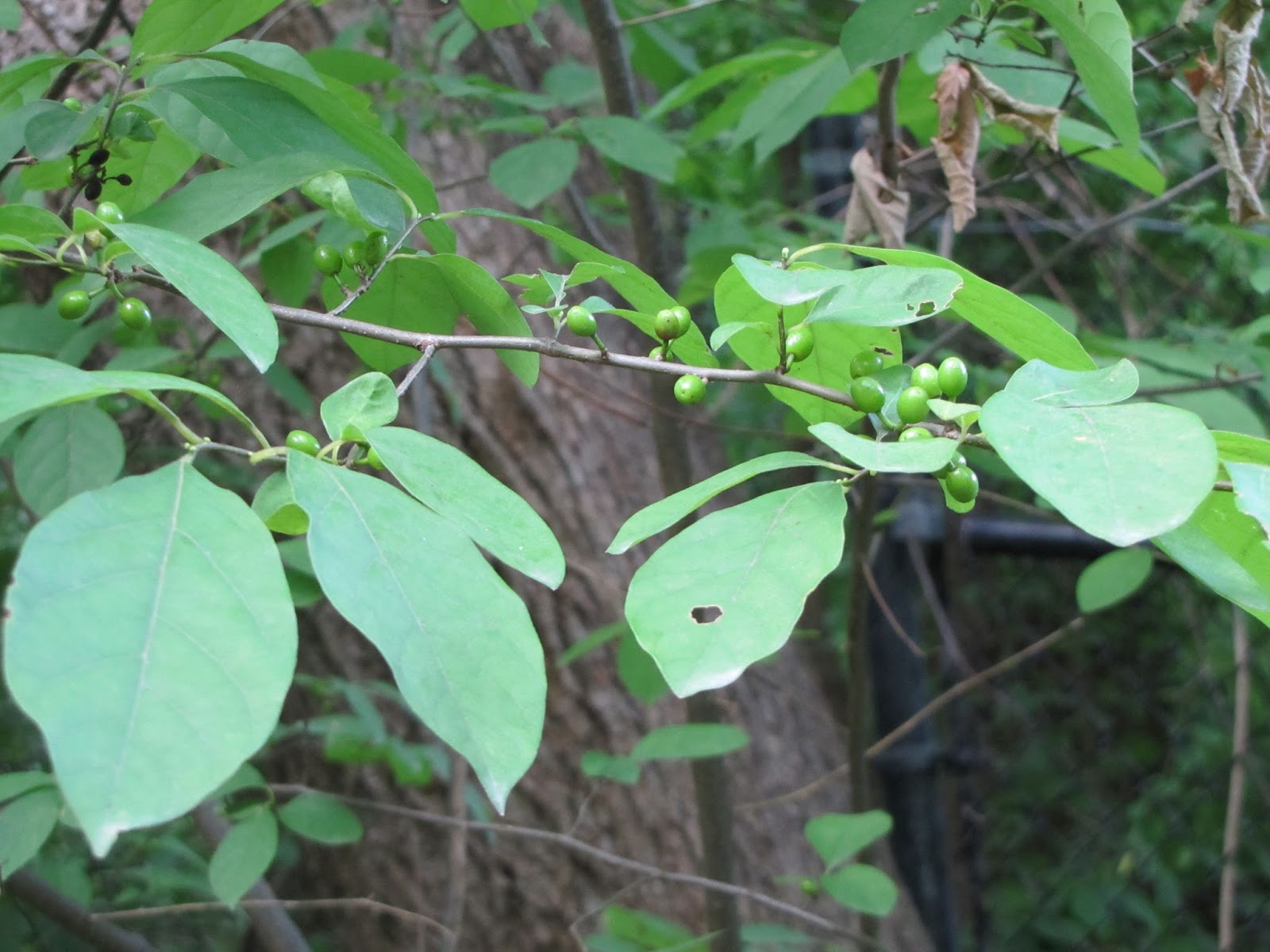
Recently, it’s been taking me a long time to get home from work most evenings. It’s not that I’m running into a lot of traffic or other typical delays. No, it’s that the path I take back to my car is lined with native Spicebushes. This summer I finally figured out how to ID them when they’re not in flower, plus I learned the sneaky trick that Spicebush Swallowtail caterpillars use to avoid being spotted. So of course I have to check every spicebush, every branch I can reach, nearly every leaf, on my way back to the car. I’m looking for folded-over leaves, or just small sections of leaf that have been folded longitudinally to make a shelter for (I hope) a tiny Spicebush Swallowtail Caterpillar. It’s a bit like a treasure hunt every evening!

One of the many Spicebushes (Lindera benzoin) near where I work in Maryland.The ones along this trail are about six feet or so tall and wide, although they can get twice that size. Ovate leaves are alternate, and lots of oval berries sprout along the branches.


Here's a closer view of a Spicebush branch, showing the many berries. They're green right now, and turn red when ripe.


A Gift With A Bonus

This all started with a gift from my boss: a small potted Spicebush that came with a bonus: a caterpillar already in residence. My boss had bought several bushes for his yard and ended up not needing them all. Most had already been visited by breeding Spicebush Swallowtails, who depend on  spicebush as their larval host plant. Knowing that I love raising caterpillars, he offered one of the extra bushes to me.
A folded leaf containing my new Spicebush Swallowtail caterpillar. The caterpillar makes this shelter by laying silk across the leaf, so the sides will close up as the silk dries out and shrinks. Pretty crafty!


I brought the bush and caterpillar home, and over the next few weeks raised the caterpillar to a butterfly. By the time I released the adult butterfly, I was hooked on my second caterpillar species. I was having so much fun, I forgot to even take photos as the caterpillar grew up.
Gleefully releasing my first-ever Spicebush Swallowtail. The branch inside the cage is spicebush that I'd hoped would be a pupation site, but of course my caterpillar decided to adhere to one of the cage walls instead. It worked out though!


I’m currently in between generations of Black Swallowtails, so my caterpillar craving has gone unanswered for a while. It seemed like Spicebush Swallowtails might make a good supplement to the Black Swallowtails.

Now everywhere I go I’m checking spicebushes for the tell-tale leaf shelters. Spicebushes are native and grow throughout the eastern United States, so I'm seeing a lot of them anywhere I hike. I did actually find one tiny caterpillar while I was visiting my mom in Ohio a few weeks ago. (I was too excited to remember to photograph it, though!)
           

Extra Defenses

I mentioned that the caterpillars hide by rolling up in leaf shelters, which is cool enough. What’s even more amazing to me is that they only come out to eat at night. Before this summer I had no idea there were nocturnal caterpillars! While I was raising the one I got from my boss, after sunset I’d sneak into my now-dark home office and flip on the light to surprise the caterpillar and catch a glimpse of it. As I mentioned, though, I neglected to photograph the caterpillar as it changed over the days.
I peeled open the leaf shelter to photograph the caterpillar when I first received it. Surely I'm not the only one who thinks the newly forming eyespots are kind of adorable!

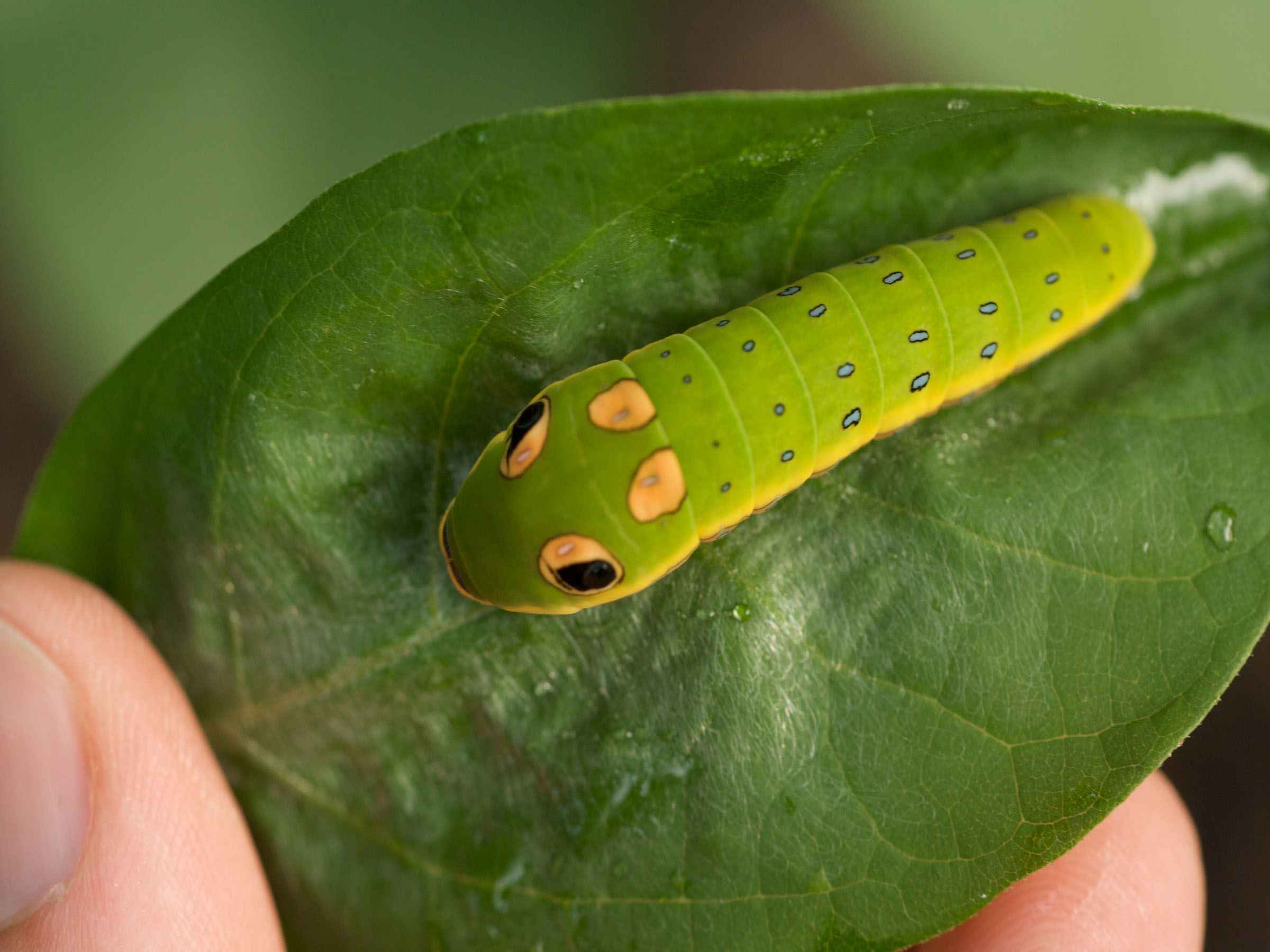
The caterpillars also have special disguises just in case they get seen: the early instars are bird-dropping mimics, like many other swallowtail species. Later instars have these really cool fake eyes that make them look like tiny fierce snakes. They hide inside their leaf shelter with their head pointing up so the snake eyes will look back at any predator smart or curious enough to peek inside the shelter. Yikes! As you see in the above image, my caterpillar was a middle instar that had both the bird poop camouflage and fake eyes starting to show, complete with false light reflection. Pretty cool.

Since I didn't photograph my caterpillar in later instars, here's one taken by Hagerty Ryan, U.S. Fish & Wildlife Service [Public Domain], via Wikimedia Commons. Those eyespots have gotten much more prominent!

I Have Hope           

So I’ve spent a lot of time over the past few weeks looking for these awesome little critters. But I haven’t found any others besides the one in Ohio. I have found many other tiny things hiding in similar leaf shelters, however: mortally offended spiders as well as a terrified tree cricket, for example. I’ve also found lots of empty leaf shelters whose caterpillars have long since moved on, and I’ve seen tons of nibbled leaves that give me hope. I’m sure not all the nibbling is done by Spicebush Swallowtail caterpillars, of course, some is also done by beetles and other hungry insects. But I have been seeing a lot of adult Spicebush Swallowtails flying around Brookside Gardens lately, nectaring on the many flowers in bloom. So there must be caterpillars eventually, right?
Adult Spicebush Swallowtail nectaring on Cardinal Flower (Lobelia) at Brookside Gardens, in Wheaton, MD.


For that matter, there must also be eggs at some point. The Spicebush Swallowtail’s eggs are usually laid on the underside of spicebush leaves, and are very pale so they blend in. Yet another piece of evidence of the sneakiness of  these canny creatures! Honestly, I don’t even bother to look for eggs on the spicebushes, they are so well camouflaged I feel like it would be hopeless unless I actually get to watch the butterfly oviposit.
Three tiny white eggs on the pale underside of Spicebush leaves. Photographed at the Wings of Fancy Live Butterfly and Caterpillar Exhibit at Brookside Gardens, Wheaton MD (see below for exhibit details). The red ribbon is added by staff to call attention to points of interest like small caterpillars and eggs. Look to the right of the ribbon to find the eggs, if you don't see them at first!


Still Searching

For now I’ll just keep looking for the hidden Spicebush Swallowtail caterpillars, and keep coming home late for dinner. It’s a good thing I’m using my slow cooker a lot this summer, I’ve already started the meal eight hours ago and I know it will be done whenever I get home.

Have you ever spotted Spicebush Swallowtail caterpillars in the wild? Leave a note in the comments if you have! If I manage to find another one I’ll remember to take a picture this time to share with you all. But even if I never find another caterpillar, I’m still enjoying the daily treasure hunt. It’s a very peaceful, mellow way to wind down after work. I hope you too have a chance to see the tiny hidden things in nature, no matter how sneakily they might be disguised.

If You Want To Visit Wings of Fancy

If you're interested in checking out the Wings of Fancy exhibit for yourself, it runs through October 25, 2015. Normally it's May through mid September, but the schedule is different this year. The exhibit is at Brookside Gardens in Wheaton, MD, and is open seven days a week from 10:00 am to 4:00 pm. Tickets are $8 per adult and $5 per child age 3-12. You can purchase your tickets at the gift shop in the Conservatory. Please keep in mind that parking may be limited at the moment; consult the Brookside Gardens web page (www.brooksidegardens.org) for any updates or for suggested parking alternatives. The street address for the Conservatory and the exhibit is 1500 Glenallan Avenue, Wheaton, MD 20902.

I personally think one of the best things about the exhibit is the Caterpillar House, where we have various larval hostplants with eggs and/or caterpillars on them, as well as a special container for chrysalises once the caterpillars get to the wandering stage. The species in the Caterpillar house change periodically, but are always North American native species. It's so cool to see the caterpillars up close, plus the display also has photos of each caterpillar species in adult form.

The Conservatory (where Wings of Fancy is located) often gets very hot in the summertime, as it's a greenhouse. But this year with the later season I'm hoping we get lots of comfortable cooler days to enjoy the exotic butterflies. I hope you get a chance to visit too!

Saturday, August 1, 2015

On the Far Side of Fifty

It took a month and a half, but I'm finally over 50 butterfly species for the year.  The delay isn't completely due to lack of effort on my part, I've been butterflying nearly every day. The problem was I kept going to the same local places, so I never got species like Hackberry Emperor or American Snout whose larval hostplants don't seem to grow in the spots I most like to visit.

The other reason I think I didn't get any new species in July was I was more than a bit distracted. We got a new kitten! She and her siblings were found abandoned, not even weaned yet. The kind family who found them bottle-raised them to an adoptable age, then started finding new homes. We took the smallest, sweetest one, a soft little brown tabby with the cutest spots on her tummy. We named her Calliope after the instrument played on New Orleans river boats. She is the joy of our lives now and it's great to watch her grow up. So some of the time I could have been butterflying in more distant places, I chose instead to stay close to home so I could spend more time with her. Oh well, she's worth it!

Anyway, today is the first of August and  I'm visiting my Mom in Ohio. Hoping to boost my butterfly count,  we went hiking at a local park: Blendon Woods, part of Columbus's great Metro Parks system. There I was able to snag a Giant Swallowtail, unmistakeable even from a distance with that lovely cross pattern on the wings, as well as a more demure Common Wood-Nymph. I didn't get any photos, sorry; the hike was part wildlife watching and part chatting. Both species were seen along Goldenrod Trail, which is mainly a meadow trail rather than a wooded one. Goldenrod Trail seemed aptly named, we spotted at least two different types of goldenrod in the meadows. Also blooming were Joe-Pye Weed, Ironweed, Swamp Milkweed, and Brown-eyed Susan (or something similar). I might have seen a third new species, Delaware Skipper, but the little thing was so elusive I couldn't get a good enough look to compare what I was seeing with the field guide, so that one has to stay a maybe. And as we all know, maybes don't count in listing. Despite that one frustration, though, Mom and I had great fun and I am very relieved to finally be on the far side of 50.

Other butterfly species we spotted at Blendon Woods today included Silver-Spotted Skipper, Eastern Tiger Swallowtail (both males and females), "Summer" Spring Azure, Monarch, Fritillary sp. (seen from the car, so I'm not 100% certain of exact ID), Zabulon Skipper, and Peck's Skipper. Not bad!


Tuesday, April 14, 2015

Butterfly Big Year Log

Update August 20: After a couple weeks of wishfully trying to make new species out of tattered or obscurely marked skippers, I finally got a new species for sure! Yesterday I spotted several Southern Broken-Dash skippers at Brookside Gardens, in Wheaton, MD. Another butterflyer also confirmed the ID, so I'm fairly confident I didn't succumb to just seeing what I wanted to see. 
 
Update August 3: Yesterday my Mom and I visited Dawes Arboretum in Newark, OH. We didn't spend much time on the main grounds of the arboretum, instead spending several hours wandering the mown paths of the Dutch Fork Wetlands area. This section of the Arboretum showcases prairie and riparian floodplain ecosystem(s). It's gorgeous, I really want to come back to this spot again.  We found tons of wildflowers in bloom, including Joe-Pye Weed, Wingstem, Coneflower, Ironweed, Queen Anne's Lace, Cardinal flower, Sawtooth Sunflower, Bee Balm, Swamp Milkweed, Pickerelweed, and on and on! I had planned to look for Hackberry Emperor at Dutch Fork Wetlands as well, but didn't have to: one was perched above the garage door when we were getting ready to leave the house! I did get another new butterfly for the year at Dutch Fork Wetlands as well: an Eastern Comma, on a pile of bird droppings beneath barn swallow nests in the observation deck structure. During our walk we also saw several Monarchs, Eastern Tiger Swallowtails, Viceroys, Pearl Crescents, Clouded and Orange Sulphurs, and of course the ubiquitous Cabbage White. 

Edit August 1: I had a long period of just seeing the same species over and over, due largely to my not traveling very far from home. Getting to where the larval hostplants are is definitely the key! Today I'm visiting my mom in Ohio, however, and finally added two new species to the list: Giant Swallowtail and Common Wood-Nymph. Both were seen at Blendon Woods Metro Park in Columbus, OH. Goldenrod Trail had plenty of blooming Ironweed, Joe-Pye Weed, Swamp Milkweed, Brown-eyed Susan (I think), and several flowers I can't yet identify. Clearly there are also lots of larval hostplants nearby, since we also saw Eastern Tiger Swallowtails, Zabulon Skippers, Peck's Skippers, Silver-Spotted Skippers, and more. Looking forward to more exploring here in Ohio!

Edit June 9: It's been a while since I had a chance to update this log, but I've definitely been making time to go butterflying! I'm discovering lots of awesome parks while I work on my Big Year, so that's great fun.  
  • April 28--At Calvert Cliffs State Park in Lusby, MD, I spotted Zebra Swallowtail, Henry's Elfin, and Eastern Pine Elfin.We didn't have time to look for fossils along the beach there, but thoroughly enjoyed our hike through the woods and marsh.
  • May 9--At Battelle-Darby Creek Metro Park in Galloway, OH, I added a Red Admiral. We also had a chance to view a days-old bison calf with the resident herd at the park, part of their prairie ecosystem. So cute!
  • May 11--Closer to home at Meadowside Nature Center in Rockville, MD, I found Eastern Tailed-blue and Horace's Duskywing. I also saw another Juvenal's Duskywing, making a good backup sighting to the one I saw on April 17. 
  • May 14--In Wheaton Regional Park I found Silver Spotted Skipper, Red-banded Hairstreak, and Red-spotted Purple.
  •  May 14--An evening visit to Stoneridge Pond in Rockville, MD got me a Peck's Skipper.
  • May 16-- While hiking around Lake Frank, part of Rock Creek Regional Park in Rockville, MD, I found Pipevine Swallowtail, Zabulon Skipper, and Wild Indigo Duskywing.
  • May 18-- A hike at the C&O Canal National Park (in Maryland, not sure of the exact town) added Tawny-edged Skipper, ironically in clover next to the parking lot rather than on the trail. We also saw probably hundreds of fluttering damselflies who were being preyed upon by huge dragonflies, probably some kind of clubtail species. I haven't really got into identifying odonates much yet... maybe that will be next year! 
  • May 19-- On a lunchtime walk at Brookside Gardens, in Wheaton, MD, I spotted a Gray Hairstreak.
  •  May 21-- Another walk at Brookside Gardens, in Wheaton, MD,  added Sachem Skipper.
  • May 26-- I found Least Skippers at Stoneridge Pond, Rockville, MD.
  • May 28--A lovely Question Mark was mudpuddling on some damp earth at Brookside Gardens, in Wheaton, MD.
  • May 30-- On a road trip south, I visited Harris Neck National Wildlife Refuge, in Townsend, GA. There I saw Painted Lady, Salt Marsh Skipper, Palamedes Swallowtail, and Little Wood-Satyr. Most exciting though was viewing the raucous nesting colony of Wood Storks there. Many other wading birds were nesting among the storks as well: Great egrets, Snowy Egrets, White Ibis. We saw Roseate Spoonbills in the park too, although I can't remember if there were any on nests in the colony. We also enjoyed watching an armadillo searching through leaf litter for a tasty snack. Definitely worth the trip!
  • May 31-- Next visit on the trip was to Orlando Wetlands PArk, in Christmas, FL. The only new butterfly I saw here was a Dainty Sulphur, but we really enjoyed watching the throngs of dragonflies swarming over the trails. Even more impressive (and somewhat frightening) were the roars coming from unseen alligators in the marsh. I've heard alligators grunting before, but never these hair-raising roars. I definitely had goosebumps.
  • June 1-- On the same road trip, I managed to photograph and identify Cassius Blue while in Epcot Park, Orlando, FL.
  • June 2-- Heading back north, I stopped at Trout Creek Park in Thonotosassa, FL. Despite an overcast sky and frequent light rain I still found a cooperative Zarucco Duskywing in the power line clearing that cuts across one of the trails. 
  • June 4-- The next stop was at Santee National Wildlife Refuge, Cuddo Unit, in Summerton, SC. This was a great park! We drove along their wildlife drive, stopping periodically to watch and photograph butterflies in clearings and meadows. We managed to identify Sleepy Orange, American Lady, and Common Buckeye. We also spotted a couple of Wild Turkeys crossing the road at one point.
  • June 7-- Back in Maryland again, I visited Meadowside Nature Center and added Little Glassywing, Great Spangled Fritillary, and Northern Pearly-eye. Common milkweed was budding up in the meadows there, but was about a week away from blooming. Swamp milkweed was just starting to bloom, though.
 Edit  April 22: Walking along Wooton Parkway in Rockville, MD, and around Stoneridge Pond there, I added Clouded Sulphur and a repeat of Eastern Tiger Swallowtail. Dogwoods are blooming, as are redbuds, which for me often signal the start of good butterflying here in the Washington, DC region. Cabbage Whites are abundant.

Edit April 21: At Sawgrass Lake Park in St. Petersburg, Florida, I added Zebra Heliconian, Viceroy (the dark Florida version), a Phoebis species that I couldn't identify further--either Cloudless Sulphur, Large Oange Sulphur, or Orange-barred Sulphur judging from size & location & general appearance,  but I never could get a close enough look at one to tell which-- and a repeat of White Peacock. I had hoped for some hairstreaks  or other Florida specialties in the marshy woods, but we struck out. Many kinds of dragonflies were abundant here, several juvenile alligators dozed throughout the park, and we also saw a lovely turtle nesting near the parking lot.

  Edit April 19: At Epcot Park in Orlando, Florida, I added White Peacock, Monarch, Great Southern White, and Fiery Skipper. We saw other butterflies but some I discounted due to the live butterfly exhibit that was ongoing. Since all the species in the exhibit were locally native, the enclosure had only curtains of loose chains at the exits and butterflies could easily escape. I maybe shouldn't count any except the Fiery Skipper from this visit, as it was the only one that wasn't included in the exhibit. I'm still contemplating the ethics here. I also saw a Black Swallowtail caterpillar on dill in a gardening display.

Edit April 18: While driving into Mariott's Cypress Villa Harbor area of timeshare condos in Orlando, FL, I added Eastern Tiger Swallowtail.

 Edit April 17: While visiting Orlando Wetlands Park in Christmas, Florida, I added Cloudless Sulphur, Gulf Fritillary, Juvenal's Duskywing (I think), Black Swallowtail, and Pearl Crescent. The weather started off partly sunny but turned dark and stormy, driving us out of the park before we'd gone very far. The blooming flowers in the marsh and around the Nature Center seemed very promising, and I'd like to visit again this year if I have a chance. 


Here's where I'll be posting my butterfly sightings and counts as I do a Butterfly Big Year in 2015, as I described here. Follow along, and let me know if you have any questions, or suggested locales you think I should check out!

1. Cabbage White Pieris rapae. Seen April 11 at Stoneridge Pond, in Rockville, MD.
2. Mourning Cloak Nymphalis antiopa. Seen April 12 at Huntley Meadows, Alexandria, VA.
3. Variegated Fritillary Euptoieta claudia. Seen April 13 while gardening in Rockville, MD.
4. Cloudless Sulphur Phoebis sennae. Seen April 17 at Orlando Wetlands Park, Christmas, FL.
5. Gulf Fritillary Agraulis vanillae. Seen April 17 at Orlando Wetlands Park, Christmas, FL.
6. Juvenal's Duskywing  Erynnis juvenalis.  Seen April 17 at Orlando Wetlands Park, Christmas, FL.(I probably ought to repeat this one elsewhere if possible, I'm not entirely confident of Juvenal's vs. Horace's duskywings.)
7. Black Swallowtail Papilio polyxenes. Seen April 17 at Orlando Wetlands Park, Christmas, FL.
8. Pearl Crescent Phyciodes tharos. Seen April 17 at Orlando Wetlands Park, Christmas, FL.
9. Eastern Tiger Swallowtail Papilio glaucus. Seen April 18 at Cypress Villa Harbor condos in Orlando, FL.
10. White Peacock Anartia jatrophae. Seen April 19 at Epcot Park in Orlando, FL, repeated April 21 at Sawgrass Lake Park, in St. Petersburg, FL.
11. Monarch Danaus plexippus. Seen April 19 at Epcot Park in Orlando, FL.
12. Great Southern White  Ascia monuste. Seen April 19 at Epcot Park in Orlando, FL (including two mating).
13. Fiery Skipper Hylephila phyleus. Seen April 19 at Epcot Park in Orlando, FL.
14. Zebra Heliconian Heliconius charithonia. Seen April 21 at Sawgrass Lake Park in St. Petersburg, FL.
15. Viceroy Limenitis archippus (dark Florida variety). Seen April 21 at Sawgrass Lake Park in St. Petersburg, FL.
16. Clouded Sulphur Colias philodice. Seen April 22 near Stoneridge Pond in Rockville, MD.
17. Zebra Swallowtail Eurytides marcellus. Seen April 28 at Calvert Cliffs State Park in Lusby, MD.
18. Henry's Elfin Callophrys henrici. Seen April 28 at Calvert Cliffs State Park in Lusby, MD.
19. Eastern Pine Elfin Callophrys niphon. Seen April 28 at Calvert Cliffs State Park in Lusby, MD.
20. Red Admiral Vanessa atalanta. Seen May 9 at Battelle-Darby Creek Metro Park in Galloway, OH.
21. Eastern Tailed-blue Everes comyntas. Seen May 11 at Meadowside Nature Center in Rockville, MD.
22. Horace's Duskywing Erynnis horatius. Seen May 11 at Meadowside Nature Center in Rockville, MD.
23. Peck's Skipper Polites peckius. Seen May 12 at Stoneridge Pond in Rockville, MD.
24. Silver-spotted Skipper Epargyreus clarus. Seen May 14 at Wheaton Regional Park in Wheaton, MD.
25. Red-banded Hairstreak Calycopis cecrops. Seen May 14 at Wheaton Regional Park in Wheaton, MD.
26. Red-spotted Purple Limenitis arthemis . Seen May 14 at Wheaton Regional Park in Wheaton, MD.
27. Pipevine Swallowtail Battus philenor. Seen May 16 at Lake Frank in Rock Creek Regional Park in Rockville, MD.
28. Zabulon Skipper Poanes zabulon. Seen May 16 at Lake Frank in Rock Creek Regional Park in Rockville, MD.
29. Wild Indigo Duskywing Erynnis baptisiae. Seen May 16 at Lake Frank in Rock Creek Regional Park in Rockville, MD.
30. Tawny-edged Skipper Polites themistocles. Seen May 18 at C&O Canal National Park, somewhere near Violette's Lock area, MD.
31. Gray Hairstreak Strymon melinus. Seen May 19 at Brookside Gardens in Wheaton, MD.
32. Sachem Skipper Atalopedes campestris. Seen May 21 at Brookside Gardens in Wheaton, MD.
33. Least Skipper Ancyloxypha numitor. Seen May 26 at Stoneridge Pond in Rockville, MD.
34. Question Mark Polygonia interrogationis. Seen May 28 at Brookside Gardens in Wheaton, MD.
35. Painted Lady Vanessa cardui. Seen May 30 at Harris Neck National Wildlife Refuge in Townsend, GA.
36. Salt Marsh Skipper Panoquina panoquin. Seen May 30 at Harris Neck National Wildlife Refuge in Townsend, GA.
37. Palamedes Swallowtail Papilio palamedes. Seen May 30 at Harris Neck National Wildlife Refuge in Townsend, GA.
38. Little Wood-Satyr Megisto cymela. Seen May 30 at Harris Neck National Wildlife Refuge in Townsend, GA.
39. Dainty Sulphur Nathalis iole. Seen May 31 at Orlando Wetlands Park in Christmas, FL.
40. Cassius Blue Leptotes cassius. Seen June 1 at Epcot Park in Orlando, FL.
41. Zarucco Duskywing Erynnis zarucco. Seen June 2 at Trout Creek Park in Thonotosassa, FL.
42. Sleepy Orange Eurema nicippe. Seen June 4 at Santee National Wildlife Refuge (Cuddo Unit) in Summerton, SC.
43. American Lady Vanessa virginiensis. Seen June 4 at Santee National Wildlife Refuge (Cuddo Unit) in Summerton, SC.
44. Common Buckeye Junonia coenia. Seen June 4 at Santee National Wildlife Refuge (Cuddo Unit) in Summerton, SC.
45. Little Glassywing Pompeius verna. Seen June 7 at Meadowside Nature Center in Rockville, MD.
46. Great Spangled Fritillary Speyeria cybele. Seen June 7 at Meadowside Nature Center in Rockville, MD.
47. Northern Pearly-eye Enodia anthedon. Seen June 7 at Meadowside Nature Center in Rockville, MD.
48. Spicebush Swallowtail Papilio troilus. Seen June 14 at Stoneridge Pond in Rockville, MD.
49. Orange Sulphur Colias eurytheme. Seen June 15 at Stoneridge Pond in Rockville, MD.
50. "Summer" Spring Azure Celastrina ladon neglecta. Seen June 17 at Brookside Gardens in Wheaton, MD.
51. Giant Swallowtail Papilio cresphontes. Seen August 1 at Blendon Woods Metro Park in Columbus, OH.
52. Common Wood-Nymph Cercyonis pegala. Seen August 1 at Blendon Woods Metro Park in Columbus, OH.
53. Hackberry Emperor Asterocampa celtis. Seen August 2 on residential building in Worthington, OH.
54. Eastern Comma Polygonia comma. Seen August 2 at Dawes Arboretum, Dutch Fork Wetlands section, in Newark, OH.
55. Swarthy Skipper, Nastra lherminier. Seen August 5 at Batelle-Darby Creek Metro Park, in Galloway, OH.
56. Southern Broken-Dash, Wallengrenia otho. Seen August 19 at Brookside Gardens, in Wheaton, MD.


I'm Doing a Butterfly Big Year

Butterfly #2: this Mourning Cloak at Huntley Meadows.

A lot of birders I know are big into lists. They keep lists of all the birds they’ve seen in their lives (Life Lists), all the birds they’ve seen in a state or county, even separate lists each year for multiple states and regions, like my county list for 2015 vs for 2014 etc. It’s a great way to casually track changes from year to year if you do it long enough.
I love making lists--tasks to do, including sub tasks and sometimes sub-sub tasks for each of those tasks (Zeno’s paradox, anybody??), places I want to see, veggies to grow, etc.—but for wildlife I mostly only keep life lists. Some birders I know keep more detailed lists: yearly ones, or even smaller lists for each state, county, etc. for every single year. Whew! I just keep a bird life list, a butterfly life list, and kind of loosely a reptile/amphibian list. I also keep a yard list for birds, but I haven't kept any year lists before.
I've heard of folks doing a “Big Year” where they try to see as many bird species as possible in a single year. You might have seen the movie a few years back about this. Recently I was reading through a local butterfly blog and discovered that a few years ago, some butterflyers in my area did a butterfly Big Year for Maryland. What a cool idea!
I’ve decided that this year I will try my own Butterfly Big Year, not just in Maryland but anywhere I travel this spring & summer. I expect most overall will come from parks here in Maryland or nearby in Virginia & DC, though. Yesterday while gardening I had three different species visit my yard already: Cabbage White, Mourning Cloak, and Variegated Fritillary. Yay!   This weekend I also spent time down at Huntley Meadows, where I saw only a Mourning Cloak high up in the trees, shown above.
Last year (2014) was a pretty poor year for butterflies in my area: low numbers for most species were reported by nearly everybody I know in the butterfly watching community. Will this year be better? I hope so. Even if not, I think keeping track of my totals will be fun. Wish me luck! I’ll post my progress here periodically, so check back from time to time and follow along.
Blogger Widget